Skip Navigation


  • Website Home
  • Blog Home
  • About the Impala Project
  • RSS Feed
  • Register

Insurance for Classic Cars: What you need to know

29th March 2012 by Miles Walker No Comments

If you are lucky enough to own a classic car then you will want to be sure your good fortune does not run out because you do not have the correct insurance coverage for your prized automobile. You will rest easier if you call a major provider to provide professional protection for your beloved automobile investment.

How to Evaluate Classic Car Insurance

The main purpose of insurance is that it does what is needed when it is needed. Classic car insurance differs from traditional car insurance also, just as a classic car is different from the generic vehicle. You are basically buying protection for occasions when disaster strikes, like a collision, fire, or act of vandalism. In the same way that airbags protect us in crashes, collector’s insurance protects our property when unexpected events come our way. The time that you put into finding the right insurance is well worth the peace of mind and value that a good collector’s policy will bring.

Classic Car Insurance Differences

This type of car insurance differs from the type of insurance you purchase for coverage of daily transportation needs. Collector’s car insurance is designed for the particular needs of the classic car collector. Traditional insurance does provide you some protection, but can leave you stranded in the case of a loss that is uncovered by the insurance contract terms.

Requirements

It helps to have a good driving record, a minimum of 10 years driving experience, no teen drivers covered, a secure garage, and proof you do not drive the classic car for daily transportation. It also helps to have limited mileage on your car. You probably are not driving this car for daily transportation, and your insurance company would prefer that you did not. Recently, mileage limits have increased, so if you drive 250 miles or less per month, you should be fine.

Review Your Limits

Review your coverage limits periodically because prices of classic cars are going up. The value that you insured your prized classic car for a decade ago may be only a fraction of what it is worth today. Ask your agent to provide you with appropriate insurance if you are restoring a vehicle. If your car is stored with no engine inside, there is no reason to pay more for mileage.

Keep Records

Keep all your paperwork and receipts for parts and labor so that you can document how much money you have put into your classic car investment. Keep this information updated and located with your other important papers.

Miles Walker is a freelance blogger who usually writes about where you can buy car insurance online over at Car Insurance Comparison .org. His recent review looked at Hawaii car insurance.

Share

Tags: car insurance, classic cars
Categories: Classic Car Insurance
Stay Updated:

Hazardous Substances in Classic Cars: What You Should Know

10th October 2011 by Brian Turner No Comments

Enthusiasts love their classic cars, and people everywhere admire them. They stand out on the road, capture peoples’ interest, and bring back memories of times gone by. However, for all the beauty and wonder that classic cars bring people, something sinister lurks beneath their glossy exterior and polished chrome: They’re full of all sorts of highly toxic, dangerous and cancer causing substances. Even worse, most people who work with classic cars don’t seem to be aware of this startling fact!

Asbestos

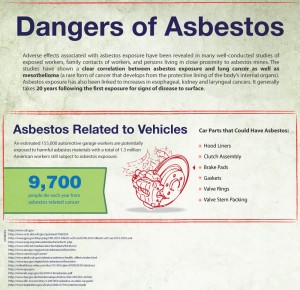
Asbestos was a common material used in the manufacture of older brake pads, and is often still found in brake pads made in foreign countries. Most people in the United States erroneously believe that their brake pads don’t contain asbestos due to modern regulations regarding their manufacture. This is a very serious issue that people who work on classic cars need to be aware of.Exposure to asbestos, especially chronic and prolonged, is linked to a number of serious health problems including mesothelioma and asbestosis. Asbestos fibers can also become lodged in the eyes or get into the mouth and swallowed, opening up the potential for other cancers, as well. When working with older cars, take precautions to shield yourself by wearing protective clothing, a dust mask and safety glasses. Be sure that you always do your work in a well-ventilated area.

Lead

In decades past, most notably before the 70’s, lead was a common ingredient used to make paint. Unfortunate laborers in the automotive industry at the time did not know that their chronic exposure to lead could cause kidney, brain, nerve and blood damage, learning disabilities, reproductive difficulties and mental retardation in their children. Many modern owners and restorers of classic cars don’t think about the fact that their car is essentially coated with lead, and remove it without care. The usual method of removing paint from cars is by sanding or grinding, which would throw lead-laden dust into the air where it can be inhaled and become lodged in the mucus membranes. Always wear protective clothing when removing paint from old cars, and do so in a well-ventilated environment.

Bromine

Bromine is a chemical that was, and still is, used in seat belts, plastic dashboards and car seats. It is also a primary ingredient used in fire retardants, which may be on a car’s other upholstery, as well. Chronic and prolonged exposure to bromine has been associated with hyperthyroidism, hypothyroidism, behavioral problems, reproductive damage, impaired memory, and damage to the kidneys, brain and liver. These problems are more likely to show up in future generations, usually the second or third.

Asbestos in Cars

Share

Categories: Uncategorized
Stay Updated:

Advice for when you’re purchasing your classic car insurance

23rd August 2011 by Karen No Comments

DH

Image courtesy of Duncan Harris

The damage caused by forced entry, vandalism, theft, or any other kind of damage goes way beyond inconvenience and financial outlay for the average classic car owner. Zealous enthusiasts usually buy and meticulously refurbish models themselves, taking months and even years to complete a project, so, as you can well imagine, loss of any kind means loss of time, love and a great amount of effort and thought, too.

While it’s crucial to enhance the security of your classic car in order to prevent vandalism, loss or damage, it’s also important for helping you keep the cost of your car insurance as low as possible. Click here to get some great quote comparisons from experts in classic car insurance. If the very worst occurs, you’ll at least want to feel reassured that your investment is, at the very least, well protected at the cheapest possible price.

Because classic cars are easier to force entry into than their more modern counterparts, it’d be incredibly prudent to invest in a Thatcham-approved alarm, immobiliser and tracker. What’s more, a tracker will enable police to retrieve a stolen car quickly, often within 24 hours – particularly valuable in view of the fact that classic cars are often quickly dismantled for parts because they’re of more value and easier to sell on this way. Also, fitting your car with one or all of these devices will help keep your insurance premium low.

TRACKER, one of the UK’s leading stolen vehicle recovery companies, appreciates that many classic car owners are often unwilling to tamper with the authenticity of the vehicle by fitting any modern technology, thus interfering with its original state, and concerned about the fact that the addition of such technological gadgetry would detract from the car’s bygone look.

Stuart Chapman, of Tracker, said: “Classic car owners are understandably cautious when it comes to installing alarm systems and immobilisers. Some devices are even unsightly, even on modern vehicles, so people feel they affect the look of the vehicle. Whilst that might be the case, the appeal of those vehicles for criminals makes it essential to protect them.”

If you’re happy that you’ve taken every step possible safeguard your car against theft or wilful damage, then there still more ways you can keep your car insurance cost to a minimum. Because classic cars are usually parked off road and most often in a garage, driven infrequently and always driven very carefully, car insurance for this class of vehicle tends to be lower than most others anyway.

However, making sure the mileage estimation for the year is accurate will satisfy your insurer that you’re less likely to be in an accident by being on the road less. Similarly, you should get your classic car valued and get the value guaranteed – if your car is written off, for example, you’re guaranteed to get the true value of the car, which usually increases with age, in the case of classics.

Share

Categories: Classic Car Insurance
Stay Updated:

«« Older Entries
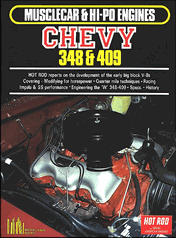
The Chevrolet 348 & 409 book

Signup for The Impala Project Newsletter

Get a Free ebook on Restoration Tips For Vintage Classic Cars

We respect your email privacy

Article categories

Visitor count


5,044
Unique
Visitors
Powered By Google Analytics

Most Popular

63 Impala 64 impala 64 impala body panels 64 impala bumper parts 64 impala fenders 64 impala filler panel 64 impala grill 64 Impala grill parts 64 impala grill section 64 impala grill tie bar 64 Impala headlight pots 64 impala magazine ad 64 impala parts 64 impala parts storage 64 Impala pics 64 Impala split bench bucket seats buy classic car parts chevy 350 Jaguar chevy small block suffix code classic car ads classic car junk yard classic car show conversion to fuel injection cowl trim tag decode cowl tag disc brake conversion easy to make engine stand engine cleaning Fall Carlisle 09 hinge pin tool Impala letter hole template interior decorating with car parts leons auto parts ls1 67 camaro lt1 350 lt1 350 engine swap LT1 Conversion power windows quarter panel logo restore 63 impala restore a 64 impala Spring Carlisle storing 64 impala vw hinge pin removal

Welcome to The Impala Project

Look around and you'll find articles on my 64 Impala restoration activities, how-to articles, a motor book section, and product reviews.
   If you'd like to post comments or contribute an article put your phone number in your profile. I'll can call you to be sure you are truly an interested reader. This keeps the blog free of annoying SPAM for everyone.

   I look forward to talking with you and hearing about your classic car restoration project.

Carl

61-64 Chevrolet

58-60 Chevrolet

Popular Posts

The most popular posts, which you select, appear here. This is a way of getting those old classics you wrote out of the dusty archives.

Search Impala Project Blog

Meta

  • Register
  • Log in
  • Entries RSS
  • Comments RSS
  • WordPress.org


© 2012 - The Impala Project - All Rights Reserved | Powered by WordPress | AquaBlock theme by Lyndi