3 hours to kill at the Henry Ford Museum
Posted byDeprecated: Function the_author was called with an argument that is deprecated since version 2.1.0 with no alternative available. in /home2/c235178/classiccarauto.com/wordpress2/wp-includes/functions.php on line 6170
Carl King - 13/02/07 at 06:02 pm
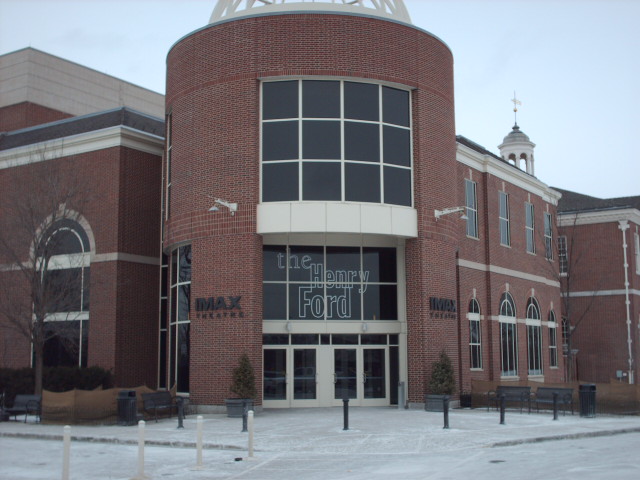 I spent the afternoon on Tuesday the 6th of February, 2006 at the Henry
  Ford Museum in Dearborn, Michigan. Why did I go to Michigan to kill 3 hours you ask? My job sent me to Lansing, Michigan for 2 days to move some network equipment from one location to another. The return flight didn’t leave for Baltimore until 7PM, so I made the best of my time after finishing the network installation.
My interest was really in the old and classic cars that would be there. Not knowing Henry Ford’s mission statement in creating the museum, I foolishly thought with my muscle car mentality that I would find a lot of the special edition classic cars of old, but instead found a lot of old “common man’s” vehicles. The idea here being that Henry Ford had a great interest in the technology that the average man used in his or her everyday life.
The auto display was a part of the transportation section that included railroad, airplanes, and of course the automobile. The old car part of the museum was an evolutionary display of the automobile industry.
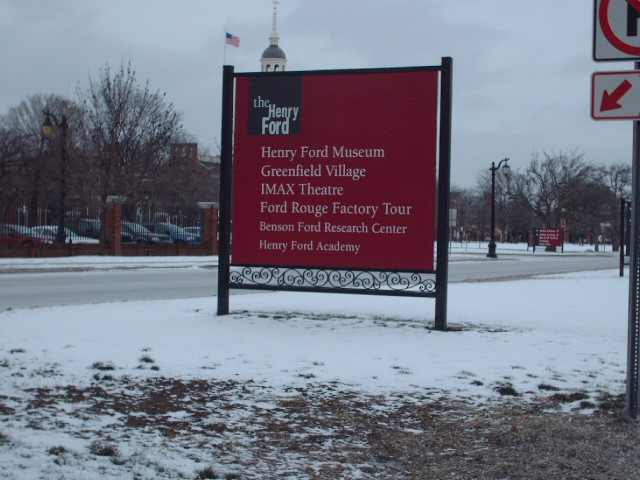
I was really lucky to get in. The weather was cold (0°F) and windy and the place did not even look open. I stopped next to one of the security people in an SUV and she directed me to the museum entrance. Following the signs didn’t intuitively bring me to the museum entrance. I did get in for a total of $18, 5 of which was for parking. Parking is on the honor system, they ask you if you are parked outside and don’t give you anything to leave in the car after paying.
The place is enormous, fashioned after Independance Hall in Philadelphia. Apparently Henry Ford wanted to buy Independence Hall, but the gov’t wouldn’t sell it to him, so he built a copy. The flooring in the main hall is done in teak, the largest teak floor in the world, some 8 acres in size.
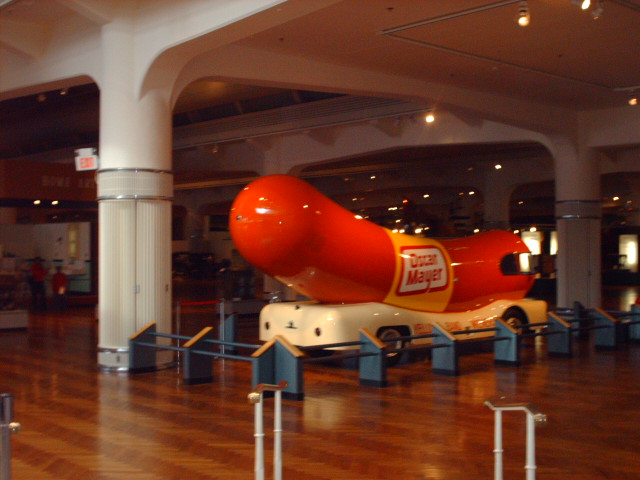 Upon entering you will find the famous WienerMobile
 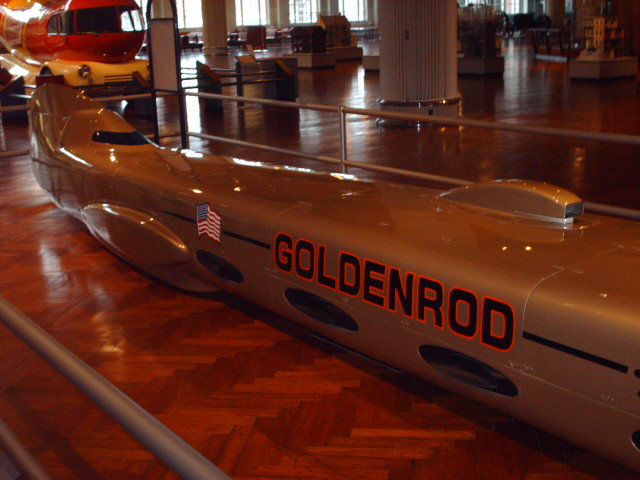 and the Goldenrod. The Goldenrod was famous for it’s land speed record of 409 mph on the Bonneville salt flats of Utah. We’ve all seen the Oscar Mayer wiener commercials and could probably sing the “I wanna be an Oscar Mayer Wiener” song.
 Upon entering the automotive section you are greeted by an eclectic collection of cars of different makes. I don’t know what made me think this would be an all Ford display, but I was pleasantly surprised. For the sake of not boring you, I am going to keep this article confined to a select few. I took plenty of pictures but some of the photos did not turn out. My camera is not the best for indoor shots.
 The classic and antique car section appeared to be divided into roughly 4
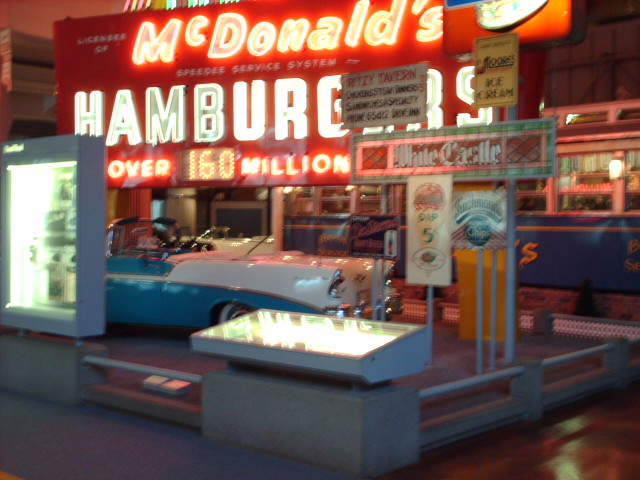 sections. In the first section I found a 1956 Chevy Belair convertible under a 50’s series set of McDonald’s golden arches. The display tells the story of how McDonald’s came to be what it is today. I guess the 56 Chevy is there for the period effect. Behind this was a diner car built in the 1940’s that was restored and moved into the museum. It’s not
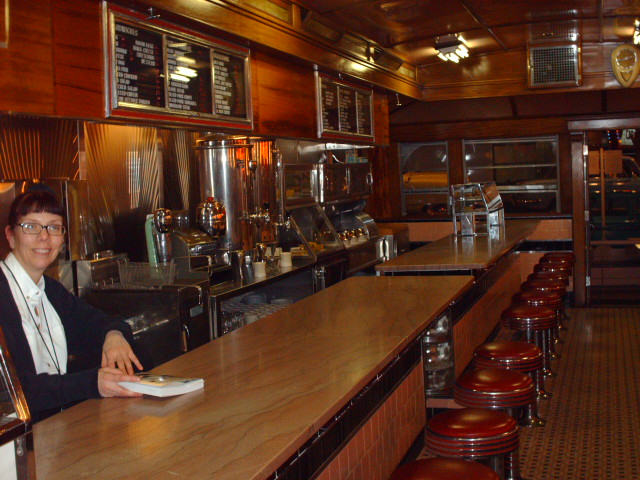
 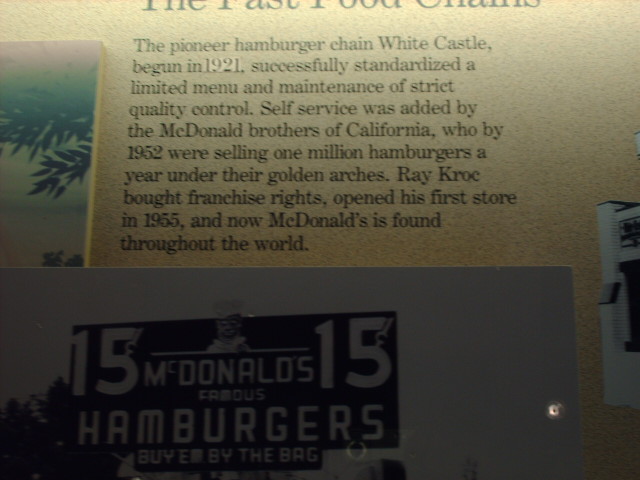 functional, you can’t buy a coffee like the good old days, but the interior is
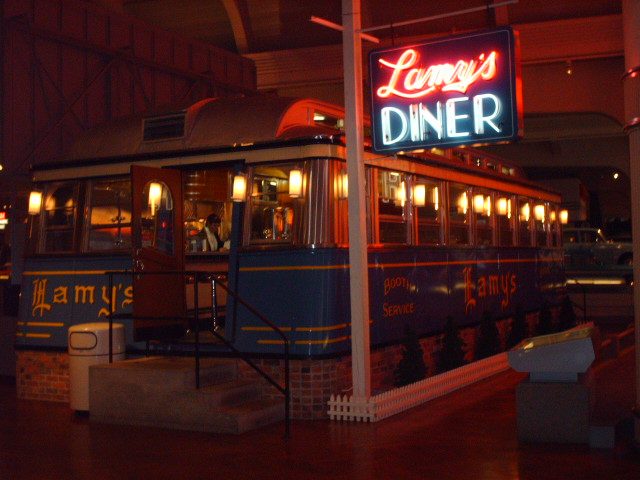 pristine, complete with an attendant to give you the background on the diner itself, the “Diner Car” era and it’s representation of Americana. She really is very entertaining and can give you an expanded description of most of the artifacts in the museum.
 Just past the diner car is a long curving double row of classic and antique cars complete with placards defining the
  year/make/model of each classic car and how the car fit into the American automobile market and the manufacturing process. The overall theme is the evolution of the automobile. Some of the old cars were partially exploded to illustrate the mass production technology that went into making it. Video displays were repetitively playing documentary style pieces of film footage from each era of American history related to the antique and classic car, mass production technology, and how the economy dictated market forces of the period. In some cases an attractive automobile spurred the economy, most notibly the muscle car period of the 60’s.
The farthest section of the museum had a few concept cars, and classic and antique cars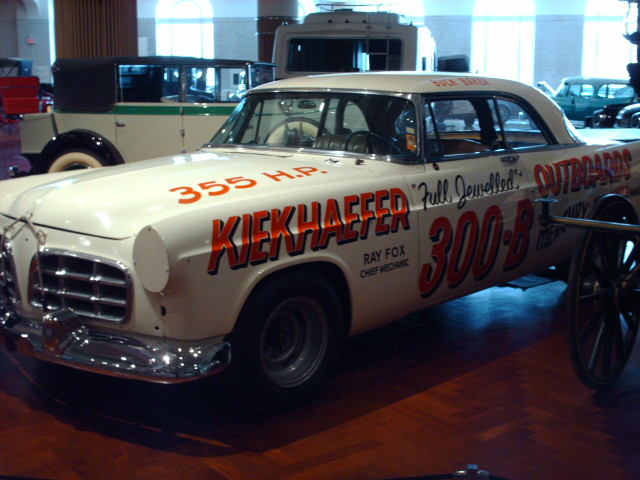 unique for one reason or another. One car that stuck out was an old Chrysler 300 modified for racing. The modern Chrysler 300 has all the tell
 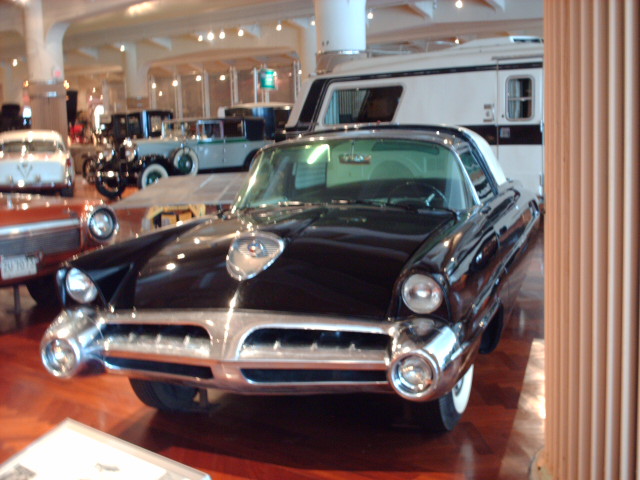 tale styling of this 1958 model. There was no placard describing this one or what letter series it belonged to, but being familiar with cars from the 50’s I deduced that it was a 58 Chrysler 300. Then of course there are the extreme designs of the 50’s like this 1952 Lincoln X100 concept car that looks like it came out of a Jetson’s cartoon. There was a definite fascination with space age and futuristic designs in the 50’s, probably leading to the space program of the 60’s spawned by the Kennedy administration.
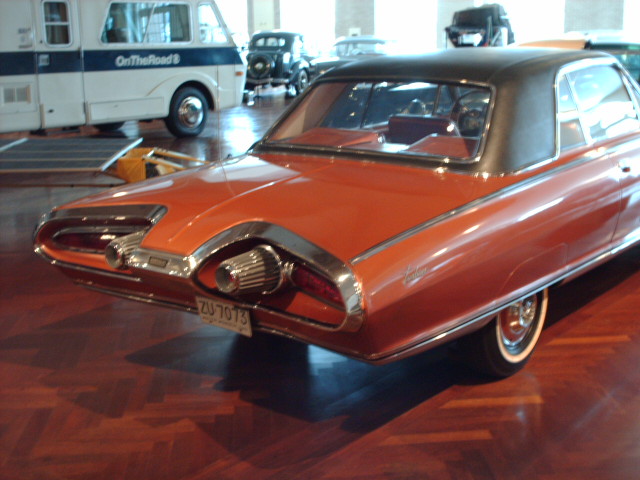 Some cars were created to toy with breakthroughs in technology. The
 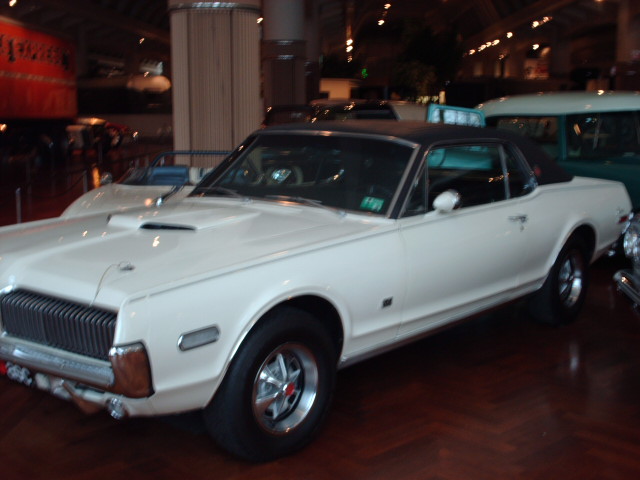 1964 Chrysler Turbine Car was one such classic car. 50 were produced and loaned to a cross section of drivers for personal use as part of the experiment. A company that invented the first electric sunroof was put on the map when Mercury started installing them in the 1968 Cougar.
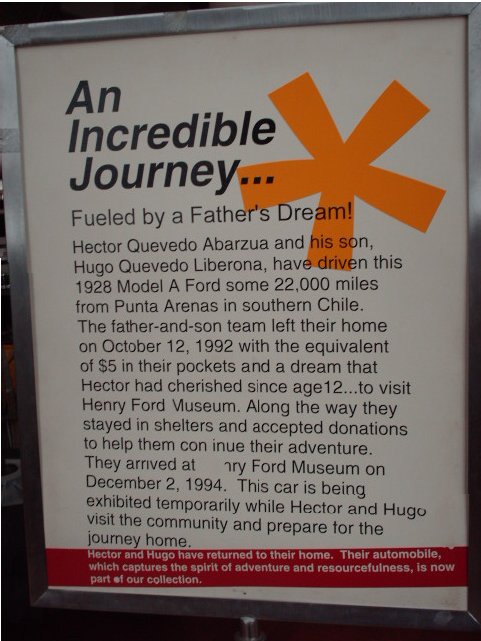 One antique car at the center of an inspirational story is this 1928 Ford
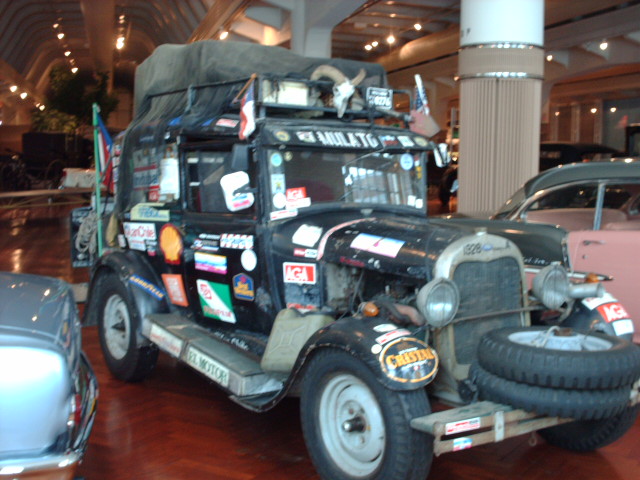 Model A. This car was driven from Chile to the Henry Ford Museum from 1992 to 1994 by a father and son team. The sign tells the story of a man living his dream while teaching his son that dreams do come true. I think this is a powerful story because of the lesson it teaches his son. You can achieve something by working towards your goal through all obstacles, rather than just imagining and dreaming about it. What a lesson! His son is likely to grow up and become a big achiever.
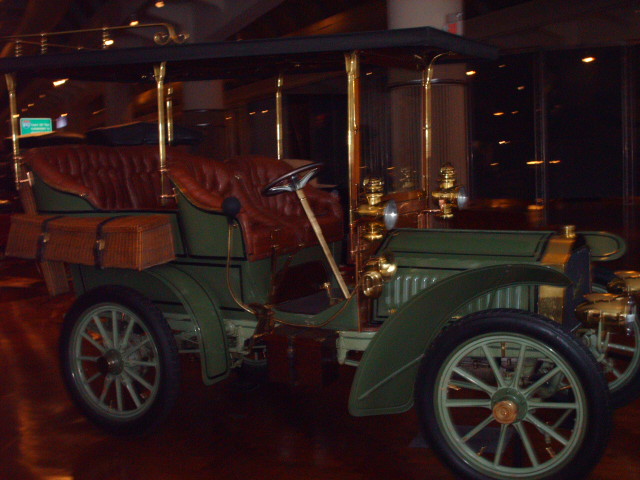 Check out this 1904 Packard Model L touring car. Image it without the canopy. Can you say “The Beverly Hillbillies”?
It’s really easy to see why they pitch yearly memberships. There is 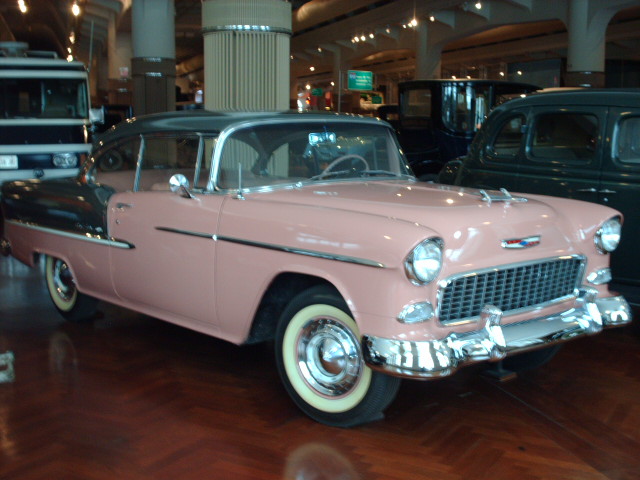 soo-o-o much to see. The lady in the diner car told me there are some 32 million artifacts, most of which are in the basement. Some of it, she says, will never go on display because they are irreplacable. There are national treasures, extremely rare musical instruments that haven’t been touched since Henry ford bought them, and all kinds of machines.
 If you are ever in the Detroit area with time on your hands, you need to check
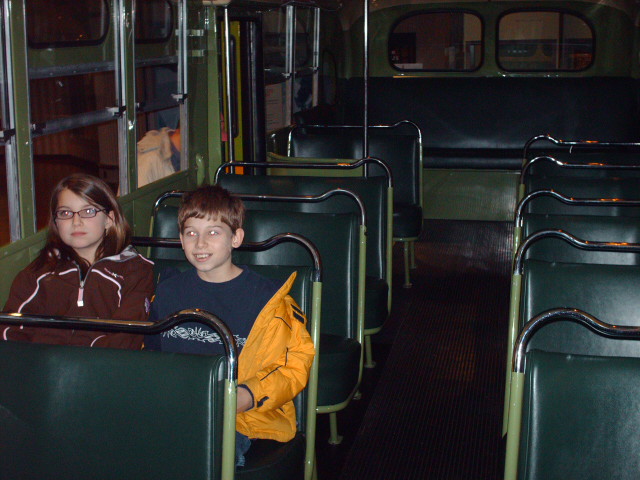 out the Henry ford Museum. You’ll find displays with rail cars, airplanes, buses, furniture, manufacturing equipment, and national treasures such as Lincoln’s chair. One such national treasure is the bus that Rosa Parks rode in when she was arrested for not moving from her seat. Here you see a young boy sitting in the very seat she was in at the time.
Now it’s time to go catch a plane. I doubt I will be back anytime soon, but if you are ever passing through you might want to take a break and stop in. The kids will love it.
 Look around and you'll find articles on my 64 Impala restoration activities, how-to articles, a motor book section, and product reviews.