The possible effects of storage on 64 Impala from Arizona
Posted byDeprecated: Function the_author was called with an argument that is deprecated since version 2.1.0 with no alternative available. in /home2/c235178/classiccarauto.com/wordpress2/wp-includes/functions.php on line 6170
Carl King - 21/03/08 at 08:03 am
>>> Paul S said:
>>>> Hi Carl, My name is Paul. I live in Las Vegas and just bought a 64
>>>> Impala. I don’t know anything about restoring cars but thought there might be
>>>> enough info out there to make this a fun project. The vehicle itself is in
>>>> really good shape. Original paint and a really straight body. The interior
>>>> is almost like new.I purchased the car from the second owner that has had
>>>> it in storage for over 12 years. The original owner made some
>>>> modifications to the engine.The engine is suppose to have only 31000
>>>> original miles. What i would like to do is get it as close to original as
>>>> possible but not sure where to look for parts and really where to
>>>> start.Can you help or point me in the right direction. Thanks for any
>>>> advise you could give. Hope to hear from you.
>>>>
>>>> Paul
>>>>
>>>> One quick question, when you first start her up, there is quite a bid of
>>>> moisture that comes out tail pipes.Any idea?
>>> Hi Paul,
>>>
>>> Congrats on the find. You don’t find too many low mileage 64 Impalas
>>> now-a-days. Check the codes and numbers to verify the authenticity.
>>> Casting numbers, date codes, serial numbers, suffix codes, and cowl tags
>>> can tell you a fair amount but this info isn’t the holy grail of
>>> verifications.
>>>
>>> The 64 Impala is a hot product and there are loads of new parts of all
>>> kinds for it. Sheet metal, moldings, interior parts, upholstery materials,
>>> chrome trim, tailights, etc… etc. You could almost build a new 64
>>> Impala.
>>>
>>> What you aren’t likely to find accurate reproductions of are, the
>>> fasteners, clips, ground straps, etc. The little things. I’ve seen the
>>> ones that the producer claims to be “original” but there is always
>>> something off about them. The purist would take his old screws and get
>>> them replated, or phosphorized. Most restorers prefer to pay a bit more
>>> for stainless when replacing fasteners.
>>>
>>> Get any chrome work done before the environmentalists have it outlawed.
>>>
>>> There are some specialists that make good parts but you tend to pay a
>>> premium for them.
>>>
>>> Good places to find new parts would be:
>>>
>>> Hubbards Impala (North Carolina)
>>> Classic Industries
>>> Impala Bobs (Arizona)
>>>
>>> You can find plenty of used 64 Impala stuff at Desert Valley Auto Parts,
>>> north of Phoenix, http://www.dvap.com/
>>>
>>> You’ll probably find the Impala sitting in storage can be just as harmful
>>> as leaving it out in the sun. Upholstery will still dryrot, metal and
>>> chrome will rust, at least surface rust. Lubricated (once upon a time)
>>> parts will dry up and then burn out quickly if not relubed before
>>> running
>>> it.
>>>
>>> Be careful about spending too much money on it up front. Get it titled and
>>> insured. Do a title search on it to be sure it was never stolen. If it sat
>>> in storage for a long time without being titled to the owner that stored
>>> it, you have reason to be suspicious.
>>>
>>> Keep me posted on your progress. I always like to track the restorations
>>> of other cars.
>>>
>>> Carl
> Paul S said:
>> Thanks for the email Carl. I just got it titled and insured,it had a clean
>> title.The owner i bought it from had it titled while in storage. Like i said
>> i am new at this,where would i find casting numbers,date codes suffix
>> codes,cowl tag numbers? Do you know what might be causing moisture coming
>> out of the tail pipes when you first start it up ? Or is that normal?
>> Thanks
>> again Carl.
>>
>> Paul
> Hi Paul,
>
> That’s good. You’ve done your homework.
>
> The moisture in the tailpipe is common this time of year. The exhaust
> system is cold and the air moving thru the engine is both hot and contains
> humidity. Granted, Arizona isn’t as humid as other parts of the country
> but it’s not bone dry during the cooler months.
>
> You could always pressure test your cooling system to be sure you don’t
> have an internal leak from the cooling system into the combustion
> chambers. Often when a car has been sitting a long time the gaskets will
> dry out and not seal properly. The intake is the most common since it is
> made out of a fiber material. Some early Chevy small blocks have sheet
> metal gaskets, but I doubt that is the case for your car. They’re not much
> better anyway.
>
> I would suggest you put a hundred miles or so on it and then re-torque all
> the head bolts, intake bolts, and water pump. Your water pump and fuel
> pump may even fail in the next 6 months or so. Your hoses and belts may
> not be far behind.
>
> You should get a copy of the shop manual. You can get them in paper
> edition or on CD.
>
> I have a link for the CD edition here:
>
> http://www.classiccarauto.com/impala/classic_car_books/chevy_shop_manual.shtml
>
> Each part that was cast has a casting number to represent the “Edition” of
> that part. You can use these numbers to verify the castings on your car as
> original. Casting numbers are well documented. The suffix code is a
> stamped number on the engine and is tied to the year and model of car the
> engine was installed in. The suffix code is also stamped on the
> differential housing, so if it doesn’t match the one on the engine, you
> know one of the 2 has been replaced, most likley the engine. The suffix
> code on the engine is on the block deck just behind the water punp on the
> passenger side. The letters in the number string are the suffix code.
>
> You can find a good casting number book here
> http://www.classiccarauto.com/impala/classic_car_books/chevrolet_casting_numbers.shtml
>
> Cowl tag numbers tell you some things that are already obvious, and some
> that aren’t. Option codes on the cowl trim tag can be useful to someone
> trying to restore a car that has been dismantled and parts are missing.
> You probably don’t need those since your car is complete.
>
> I have talked to guys that had suspicious or missing VIN number tags, and
> using the cowl trim tag you can re-assemble the VIN using the differnt
> fields of codes.
>
> If you want a complete number guide, you can get one here
> http://www.classiccarauto.com/impala/classic_car_books/chevrolet_vin_numbers.shtml
>
> These guides are more useful to a restorer than they are to someone with a
> complete car. For the price, I wouldn’t be without them.
>
> Carl
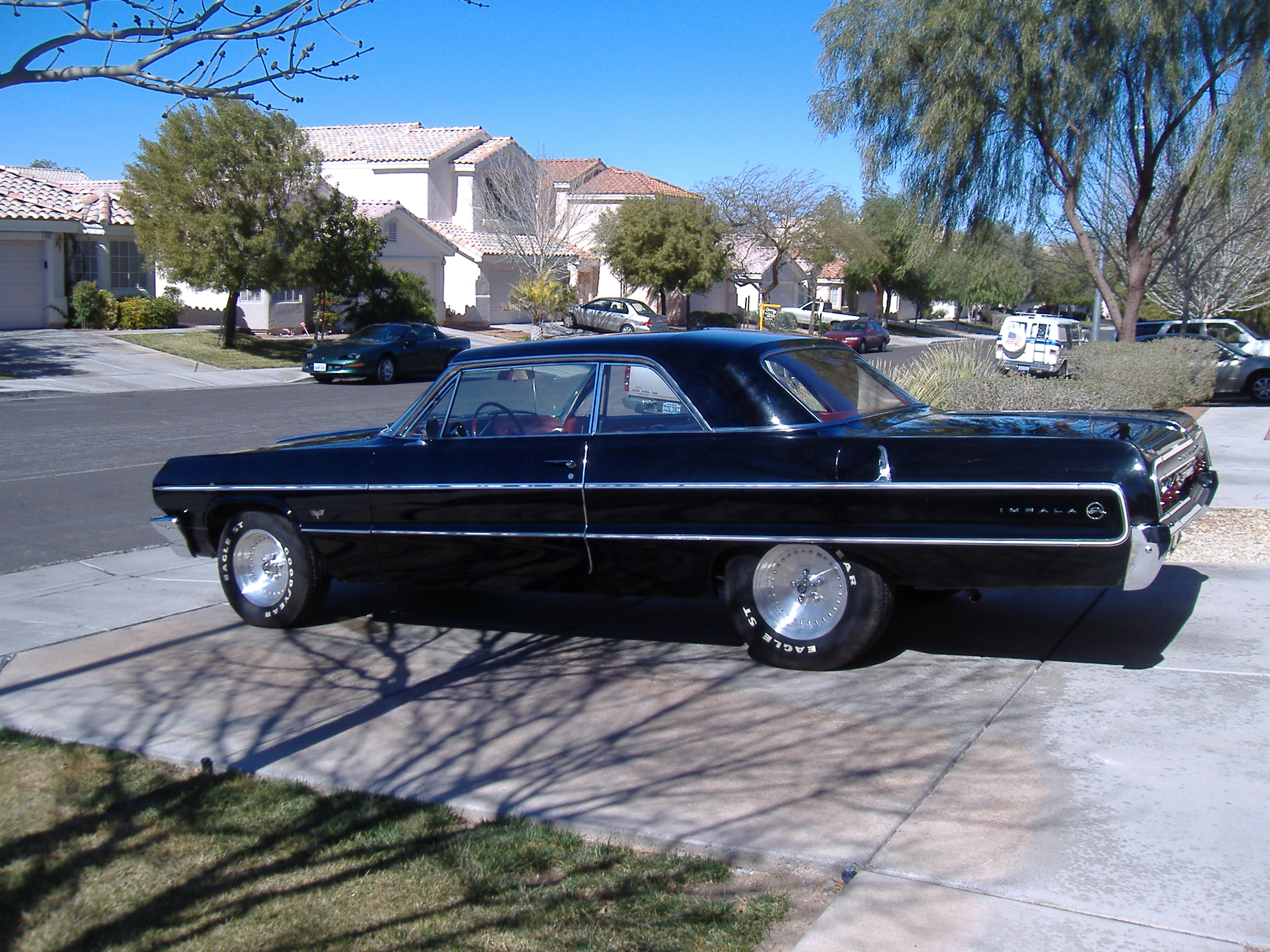 Thank you so much for the information you have givin to me Carl. I will do
some research and let you know what i find. I have taken the links you gave
me and saved them. I don’t know if i sent a picture but here is one shot of
my 64. Thanks again Carl, will talk to you soon> Paul
 Look around and you'll find articles on my 64 Impala restoration activities, how-to articles, a motor book section, and product reviews.